A practical session on specifications, sub-agents, Git, testing, deployment, and maintaining applications built with Claude Code, Codex, and Antigravity. Learn how to bridge the gap between AI code generation and reliable, production-ready software.
Registrations for the September 2026 session will open once the date is finalized.
AI coding assistants like Claude Code and Antigravity can generate hundreds of lines of code in seconds. However, shipping reliable applications requires bridging the gap between raw generation and production standards.
Why code that runs fine on a developer's local machine frequently breaks when deployed to live environments with real-world workloads.
Managing the risk of AI assistants editing files blindly or introducing subtle logic bugs that escape basic code reviews.
How to coordinate AI changes with Git repositories, maintain clean commit histories, and handle conflict resolution effectively.
Structuring continuous-integration tests to automatically catch regressions and validate AI-generated logic before deployment.
Managing specifications, parent agents, and sub-agents to execute complex software-engineering tasks systematically.
Evolving, refactoring, and maintaining codebases that are partially or fully generated by autonomous coding agents over time.
Learn how to write precise prompt-level specifications that prevent coding agents from hallucinating or going off-track.
Understand how to delegate sub-tasks to specialized sub-agents and manage their state and communication flows.
Implement testing hooks and sandboxed environments to verify agent behavior safely before merging code changes.
Integrate AI-driven code edits into standard Git branches, PR workflows, and peer review cycles without friction.
Overview of current models and autonomous tools (Claude Code, Codex, Antigravity) and how they build software.
Translating business logic into technical specifications that AI agents can consume and execute reliably.
Breaking complex features down into specialized sub-agents for research, implementation, and testing.
Establishing workflows to commit, review, and merge AI-generated PRs using standard developer tooling.
Setting up local and CI test runner environments to automatically find and fix bugs introduced by AI edits.
Running agents in secure environments to prevent unintended file modifications or command execution risks.
Deploying validated applications to cloud platforms with continuous monitoring and regression tracking.
Strategies for human-AI co-development and maintaining technical debt in AI-generated codebases.
Developers who want to integrate AI coding assistants into their daily workflows without sacrificing code quality.
Engineering leaders designing specifications, development standards, and code verification systems for their teams.
Founders building their first product versions using AI tools and needing to establish sustainable codebases.
Professionals establishing automated testing pipelines, sandboxed runtimes, and continuous integration workflows.
Advisors helping client development teams structure AI adoption, tooling, and governance policies.
Specialists designing custom software-engineering agent workflows and multi-agent development systems.
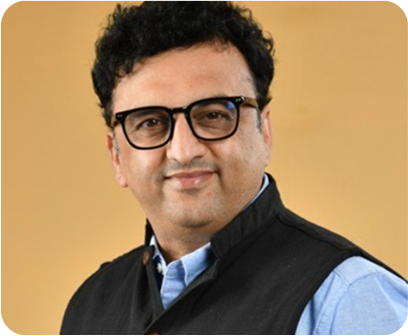
Gaurav is a data science and applied AI enablement expert with extensive experience in analytics and business intelligence. He leads AI program design and curriculum innovation at Zero Zeta, ensuring AI enablement translates directly into tangible business impact. With deep expertise across auto-CAD, telecom networks, and supply chain implementations, he focuses on helping business leaders apply practical decision-making frameworks for structured enterprise adoption.
Understand the engineering practices needed to review, version, test, deploy, and maintain applications created with coding agents.
